Preparing for Baby
What to Pack in Your Baby Delivery Bag: The Ultimate Checklist
Health Education
3 min read
Najooka Javier

Getting ready to have a baby is exciting, but it can also feel a little overwhelming. One important thing to add to your to-do list is packing your baby delivery bag. This is the bag you will take with you to the hospital, birthing center, or wherever you’re planning to deliver your new little one. It’s important to do this well before all the chaos of labor happens, so you have what you need and don’t have to stress.
In this blog, we are sharing some tips to help you get your bag ready. We will first explain everything you may want to pack— including things for you, your baby, and even your partner—so you are prepared for your special day. We will also answer a few common questions about baby delivery bags.
Essentials for You
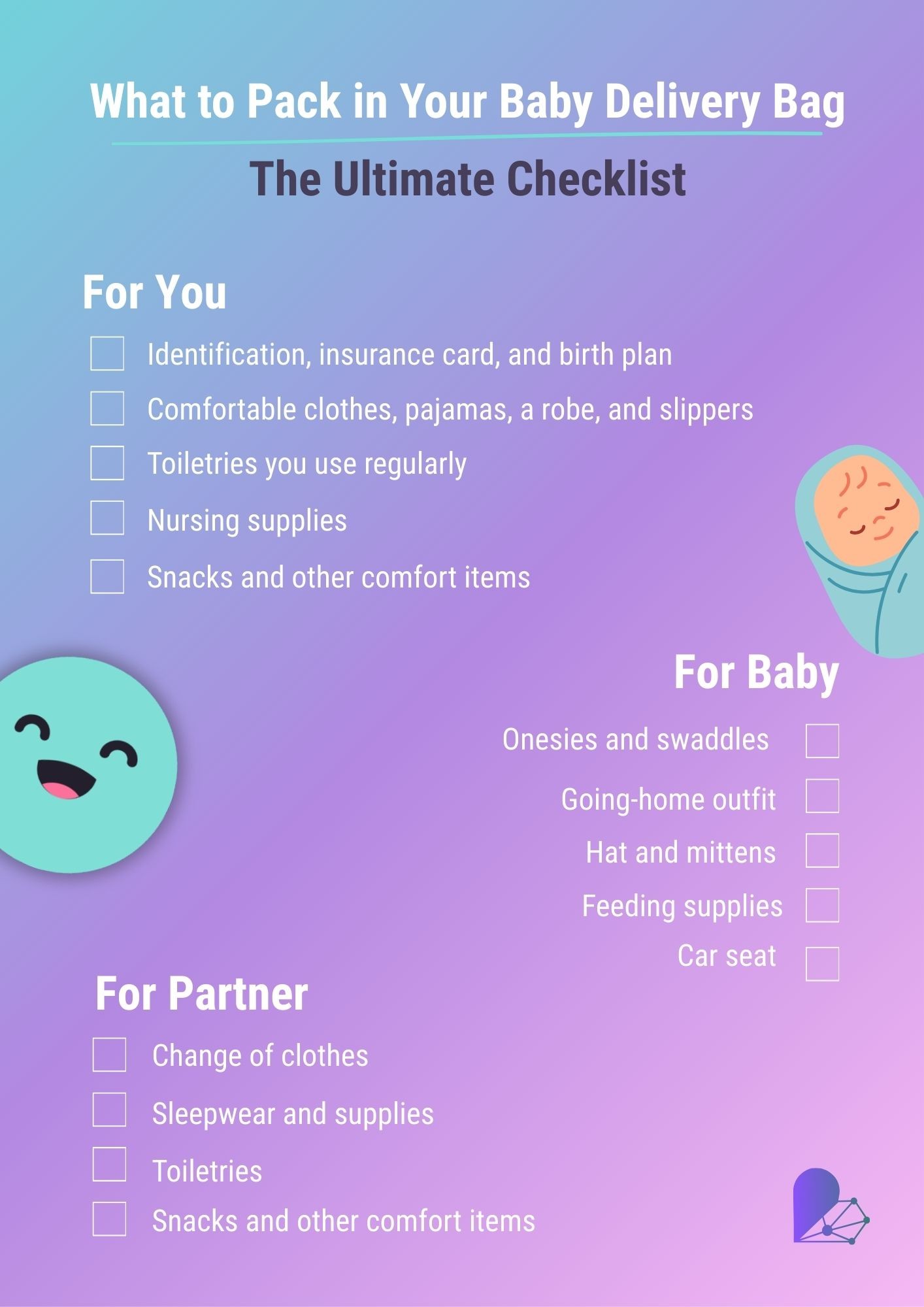
When you are packing for yourself, think about comfort, convenience, and recovery. Here’s what you should include:
1. Important Documents
Identification and insurance card: You will need these to check in at the hospital or birthing center.
Birth plan: If you have a birth plan, bring a printed copy to share with your healthcare team.
2. Clothing
Comfortable nightgown or pajamas: Having your own pajamas can make you feel more comfortable.
Robe and slippers: Having your own robe and slippers can keep you warm and comfortable when you are walking around the hospital or birthing center.
Nursing bras and tops: If you’re planning to breastfeed, specially designed nursing bras and tops are key.
Loose-fitting clothes for going home: Remember, your body will still be healing, so pick an outfit that is soft and loose.
3. Toiletries
Toothbrush, toothpaste, and deodorant: These can help you stay clean and feel fresh.
Face wash and moisturizer: Having your own face cleanser and moisturizer can help you feel like yourself.
Lip balm: Pregnancy hormones and labor can make your lips dry and chapped.
Hairbrush, hair ties, and dry shampoo: These are key to keeping your hair out of your face and keeping you feeling fresh throughout your stay.
4. Comfort Items
Nipple cream and nursing pads: If you plan to breastfeed, these are essential for relieving sore nipples and preventing cracking and bleeding. See our blog on How to Prepare for Breastfeeding Before Baby Arrives for more tips.
Journal: If you started journaling during your pregnancy, bring that journal with you to keep it up.
Phone (and/or tablet) and charger: These are key for calling family and friends, taking photos, playing your favorite music, and more. Don’t forget your headphones!
Pillow and pillowcase: If you have a pillow you love, bring it with you. Just make sure your pillowcase stands out, so it doesn’t get mixed up with hospital pillows.
Snacks: Pack light snacks, like granola bars or crackers, or a snack with protein to help you feel fuller longer.
Essentials for Baby
Your little one doesn’t need much for their first few days except for your love and warmth. But the following items can make life easier for both of you and more memorable.
1. Clothing
Onesies: Choose soft, cotton onesies for comfort and to avoid rashes.
Hats and mittens: These are good for keeping your baby warm and preventing them from scratching.
Going home outfit: Pick something special for the photos you will want to take of their first day coming home.
2. Baby Care Items
Receiving blankets or swaddles: These are key to keeping your baby snug, warm, and feeling comforted.
Feeding supplies. If you’re planning to breastfeed, bring any supplies you have gathered, such as nursing pillows and covers. If you cannot or choose not to breastfeed, the hospital will likely have formula and bottles, but if you have preferred brands, you may want to bring those.
Car seat: A car seat is essential to keeping your baby safe when you go home. Many hospitals will insist you have a car seat before allowing you to leave.
Newborn diapers and wipes: Many hospitals provide these, but if you have a preferred brand, consider bringing them.
For Your Partner or Support Person
If someone will be with you during delivery, they will want to be prepared, too.
Clean clothes and sleepover supplies: Labor can take a long time; packing pajamas, a robe, slippers, and a pillow can help keep them comfortable.
Toiletries: Have your partner pack a toothbrush, deodorant, and anything else they use regularly.
Snacks and drinks: Bringing extra snacks and drinks can make it easier for your partner to stay with you without going hungry.
Comfort items: There may be a lot of waiting and downtime—packing a book, a phone/tablet, and other items to pass the time can help keep their spirits up, too.
Frequently Asked Questions
When should I pack my bag?
It’s best to have your baby go-bag ready by week 36 of your pregnancy, because babies sometimes arrive earlier than expected.
Why is packing early important?
Once labor starts, you will not want to be rushing to find your essentials. Having your bag ready early means you can grab it and go—no stress.
Where should I keep my bag?
Keep your bag somewhere that is easy-to-reach and that you won’t forget it, like near your front door or in your car.
Is there anything I should leave at home?
Hospitals and birthing centers will provide many of the basics (diapers, baby blankets, etc.), so unless you have preferred brands, you can leave those at home.
Are there any other tips for packing smart?
If you can, separate items for you, your baby, and your partner. You can use packing cubes or separators if your bag doesn’t have different compartments.
Final Thoughts
Being prepared will help you feel calmer, more confident, and ready for this amazing new chapter. Your baby delivery bag is your toolkit for staying comfortable and confident on one of the biggest days of your life. Pack it with care, check it twice, and keep it ready.